Context
Service Systems Design MSc · Aalborg University Copenhagen · Team project
Other members: Isabella Ringbæk, Linshan Wu, Michalina Debska, Rikke Gehrke Jensen
Understanding the challenge
We had to turn a broad future loyalty topic into a clear service direction for IKEA. Loyalty could easily stay limited to points, discounts, and rewards. Instead, we looked at where IKEA could create more meaningful value in people’s lives and build stronger long-term relationships.
Through research, the focus became more specific: supporting newcomers moving to Denmark, who often face uncertainty, limited local knowledge, and pressure when making early housing, furnishing, and home-related decisions.
Problem
Moving to Denmark is expected to become more common in the future, but relocation is not equally easy for everyone. Newcomers often face uncertainty, limited local knowledge, and pressure when making early housing, furnishing, and home-related decisions. Without trusted guidance or established support networks, they may rely on basic criteria like price and availability, which can lead to short-term choices, higher stress, and greater risk of scams.
Design question
How might we empower newcomers to make confident decisions in their early stage of moving to Denmark?
Methods and tools used
Desktop research to explore loyalty programs, future retail, AI-supported services, housing trends, democratic design, and IKEA values.
IKEA service safari to observe IKEA Family visibility, in-store touchpoints, signage, customer interaction, and the store experience.
Interview with a former IKEA employee to understand frontline experience, employee-customer touchpoints, and loyalty from inside the organisation.
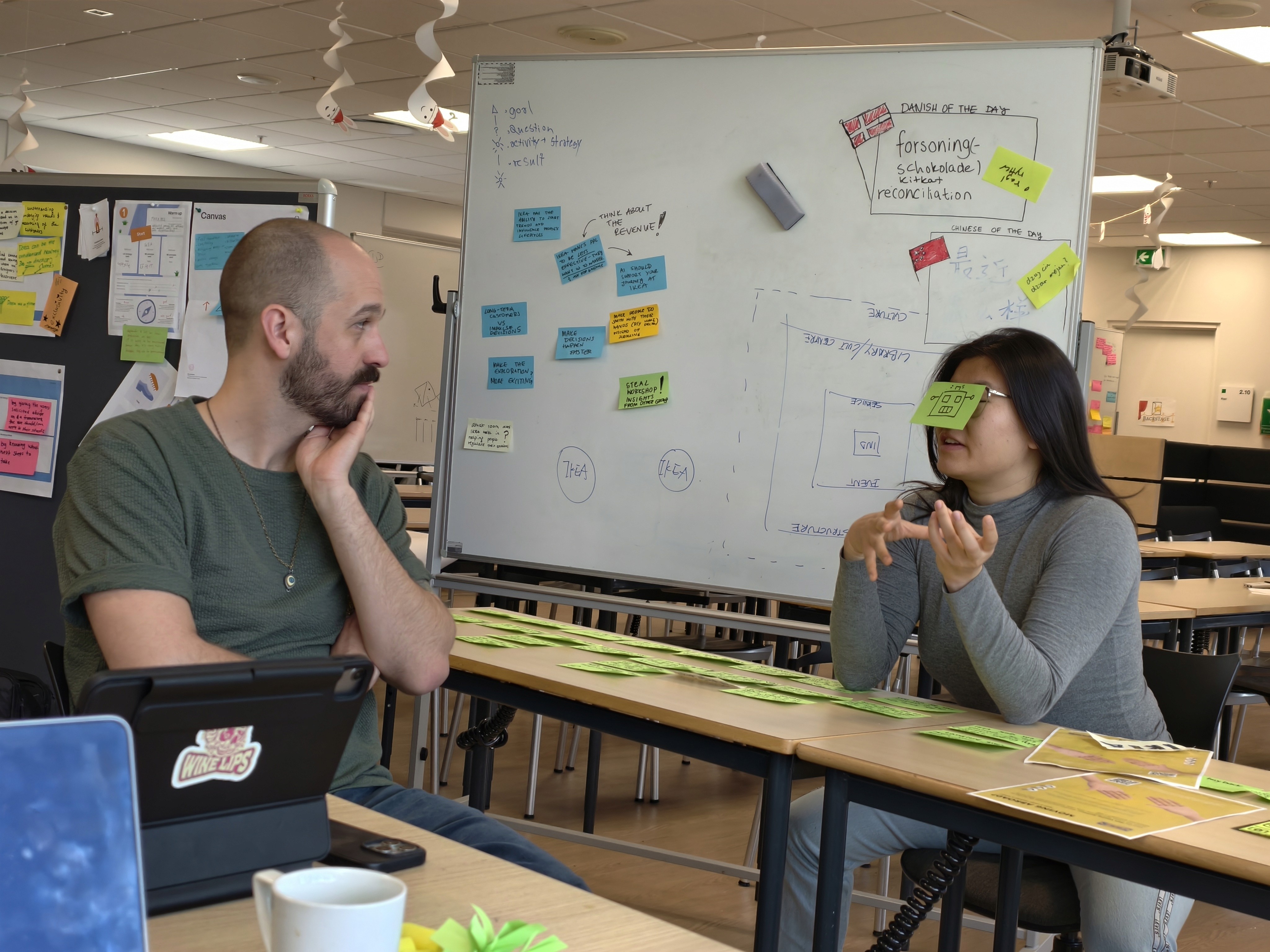
Futures workshop to explore desirable and probable futures around living, moving, AI support, and what people may value in 2036.
Interviews with people who had recently moved or gone through a life transition involving furniture or home decisions.
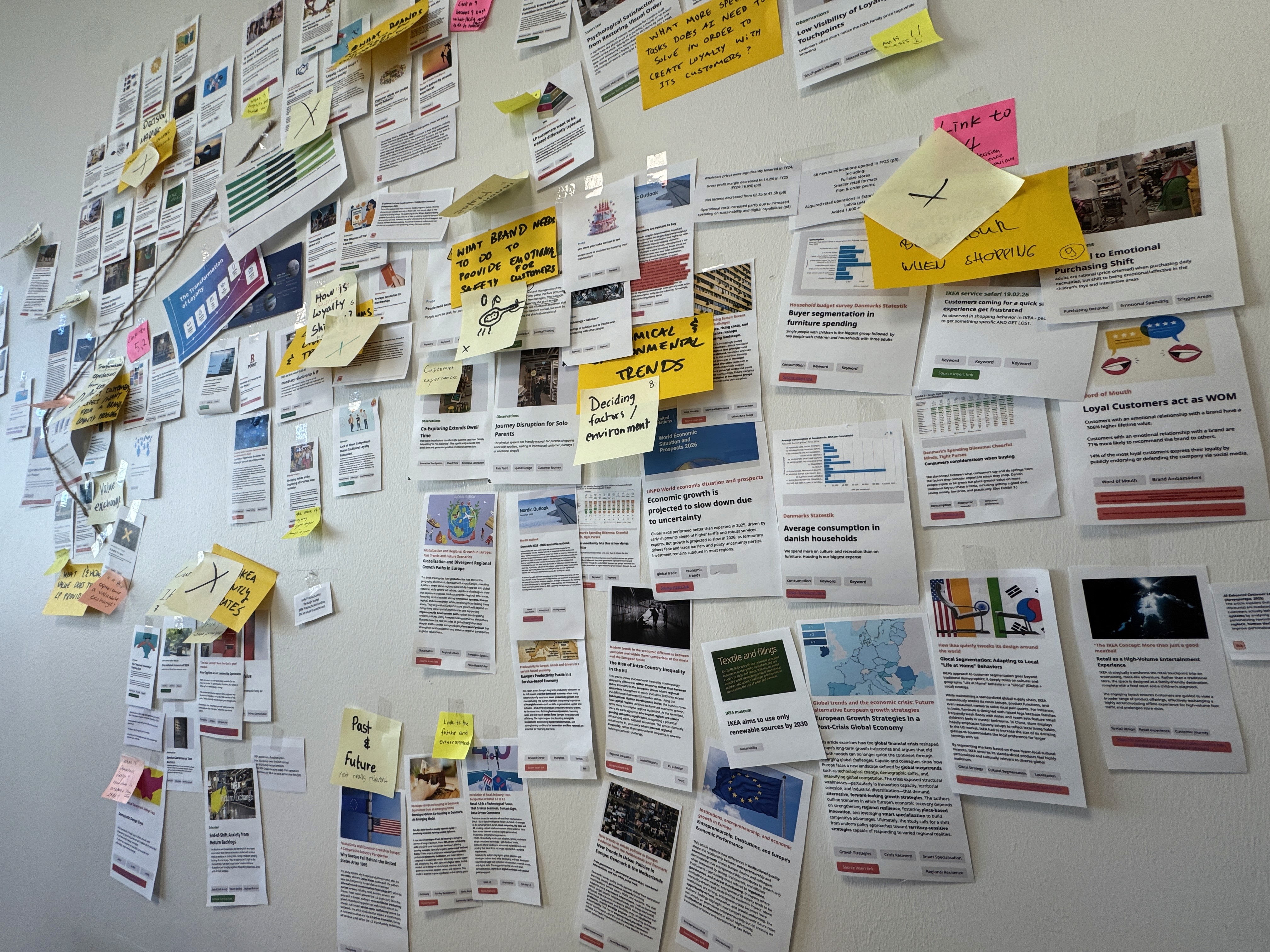
Data wall and thematic clustering to identify patterns around uncertainty, logistics, support networks, temporary living, and trust.
HMW iterations to narrow the project toward newcomers and early-stage moving decisions.
Ideation and design criteria to compare service directions, including housing support, jobs for newcomers, and roommate/community concepts.
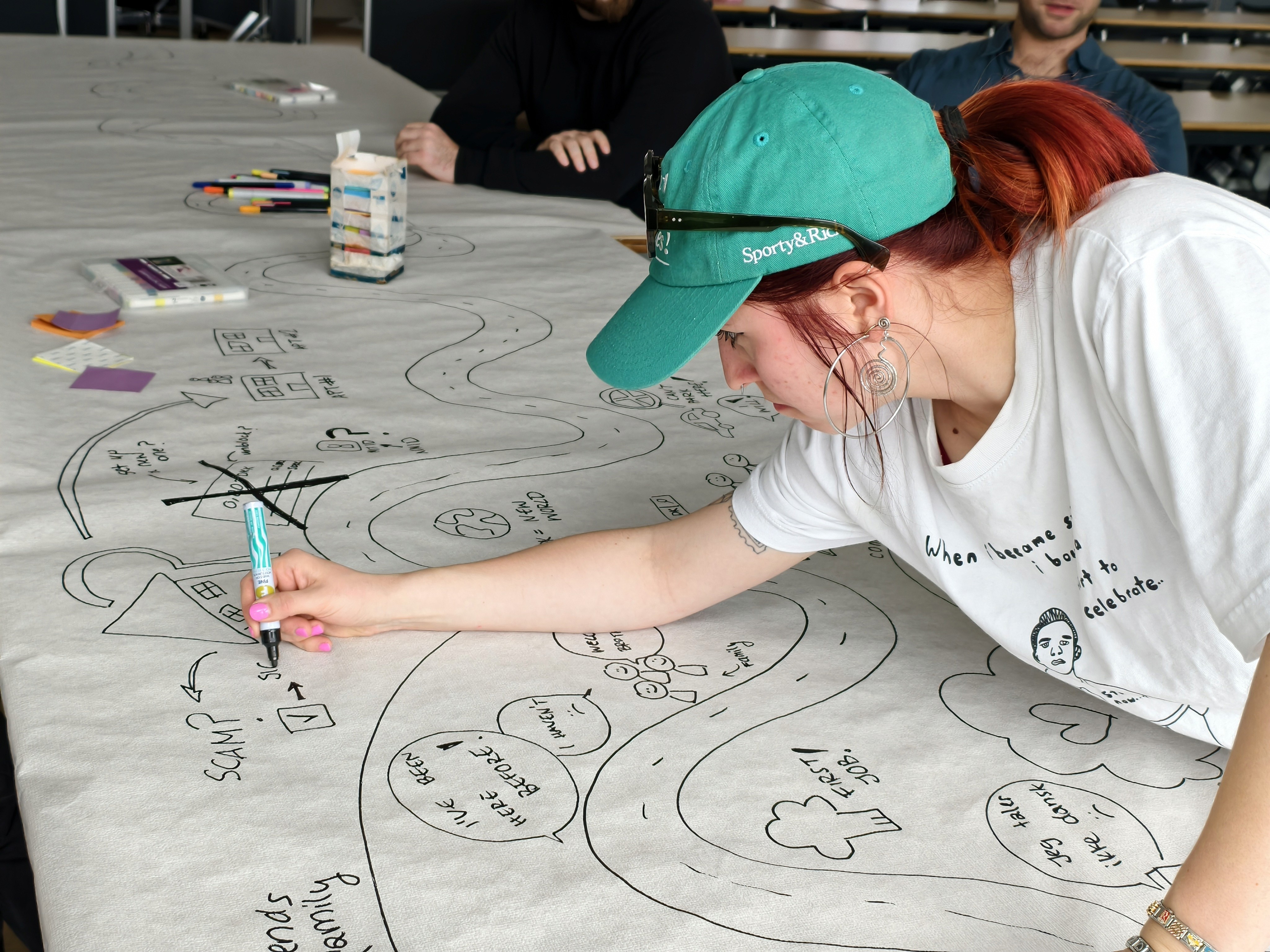
User journey mapping to structure IKEA Compass through Garry’s relocation journey.
Fake-door pretotyping to test early curiosity around the relocation-support offer.
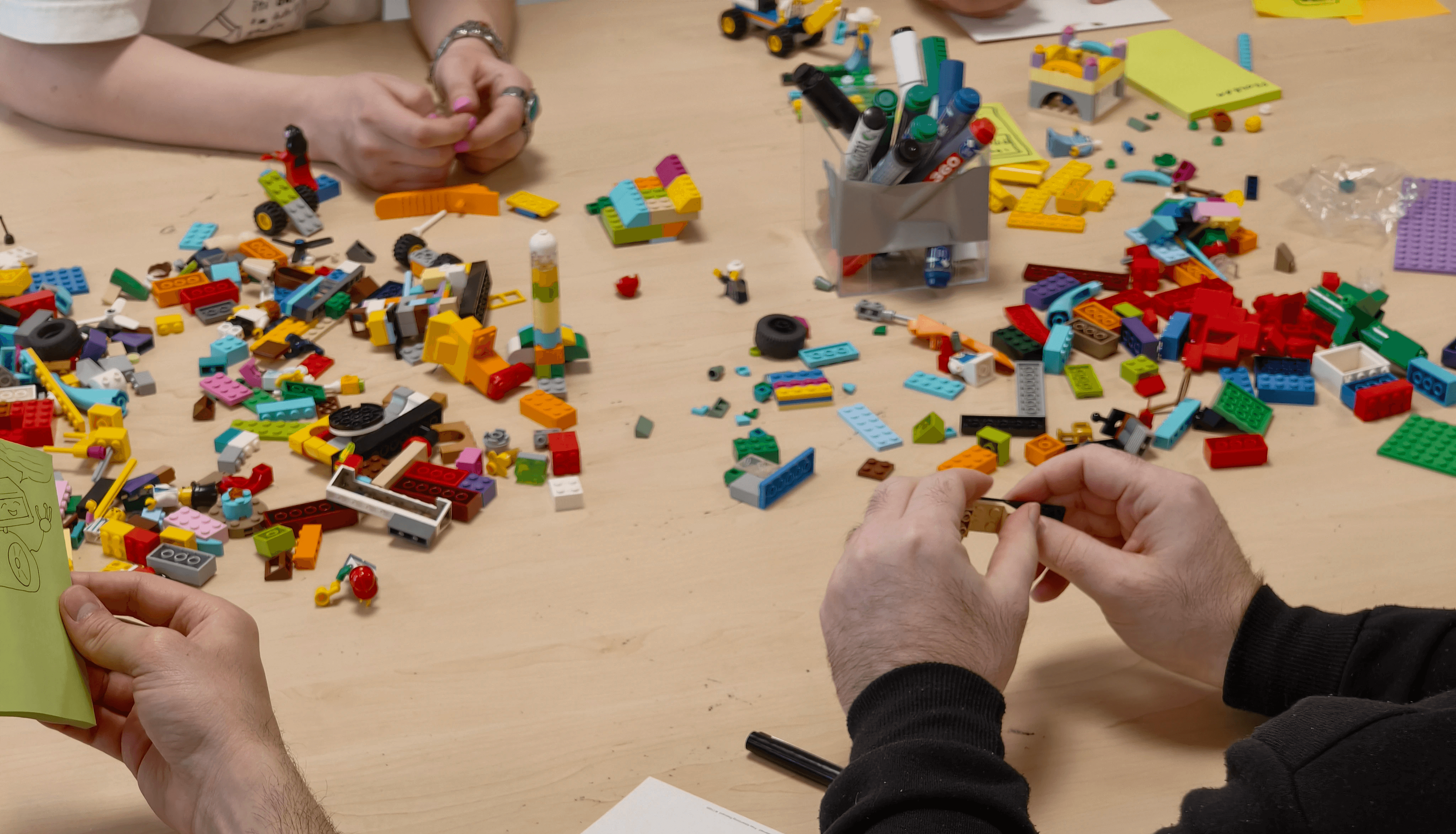
Role-playing and service prototyping to explore digital, human, and physical touchpoints.
What we learned
Moving and furnishing decisions during life transitions are not only about style or price. People make decisions under pressure, balancing budget, availability, speed, logistics, temporary living, and uncertainty.
Community appeared as a practical support system, not only an emotional one. People rely on others for advice, transport, second-hand furniture, reassurance, and local knowledge.
AI was useful when simplifying complex choices, but participants still wanted transparency, human control, and emotionally meaningful decisions.
Reframing the problem
We reframed the project from a broad question about future loyalty into a more focused opportunity: IKEA could become useful when people are uncertain and trying to create a home in an unfamiliar country.
After reframing
Instead of designing another reward mechanic, the direction became a future loyalty service that supports newcomers during relocation.
After reframing the challenge, we translated the research into IKEA Compass: a speculative 2036 relocation-support service connected to moving, housing, trust, and home setup.
The service follows Garry, a newcomer moving to Copenhagen. Through IKEA Compass, he receives guidance, housing options, remote viewing support, lease explanation, scam protection, and optional furnishing support.
What the methods revealed
The design criteria helped us compare different directions, including housing support, jobs for newcomers, and roommate/community concepts. Housing support became the strongest direction because it addressed uncertainty, stress, safety, and practical decision-making during relocation.
The fake-door test showed limited but real curiosity. We did not treat it as full validation, but as an early signal that the offer was understandable enough for some users to engage with.
The service journey also showed that IKEA Compass needs clear boundaries. The concept works best if IKEA acts as a trusted orchestrator, supported by advisors, AI tools, housing partners, legal/payment support, and IKEA’s home-furnishing ecosystem.
Resulting service direction
IKEA Compass is a cross-country relocation-support service that helps newcomers move to Denmark with more confidence.
The service supports users before arrival by helping them understand options, view apartments remotely, make safer housing decisions, and prepare their future home. After arrival, IKEA can continue the relationship through furnishing support, buyback credits, and home setup services.
Co-created value
Newcomers: A safer and less overwhelming start when moving to Denmark.
IKEA: A stronger long-term relationship with customers at the beginning of a major life transition.
IKEA Family: A future loyalty direction based on trust, support, and life-stage relevance instead of only discounts.
Service system: A relocation ecosystem connecting digital tools, human advisors, housing support, and home furnishing.
Short concept summary
IKEA Compass helps newcomers make confident early moving decisions by combining trusted guidance, remote apartment viewing, lease explanation, scam protection, and optional furnishing support.
The concept positions IKEA as more than a furniture retailer. It becomes a support system for people trying to create a home in an unfamiliar country.