Context
Service Systems Design MSc · Aalborg University Copenhagen · Team project
Other members: Nicholas Steinkamp, Shane Anderson, Pál Király
Understanding the challenge
KBHFF is a Copenhagen food cooperative built on shared values and volunteer work. The project focused on how to attract and retain young members for KBHFF.
The challenge was to explore how the cooperative could better engage a younger audience while staying aligned with its core values and structure.
Problem
KBHFF’s service model relies on synchronised, time-sensitive logistics, which makes the pickup experience inflexible for young members and contributes to disengagement over time.
Initial design question
How might KBHFF become more attractive and sustainable for younger members without compromising its cooperative values and volunteer-based structure?
Research approach
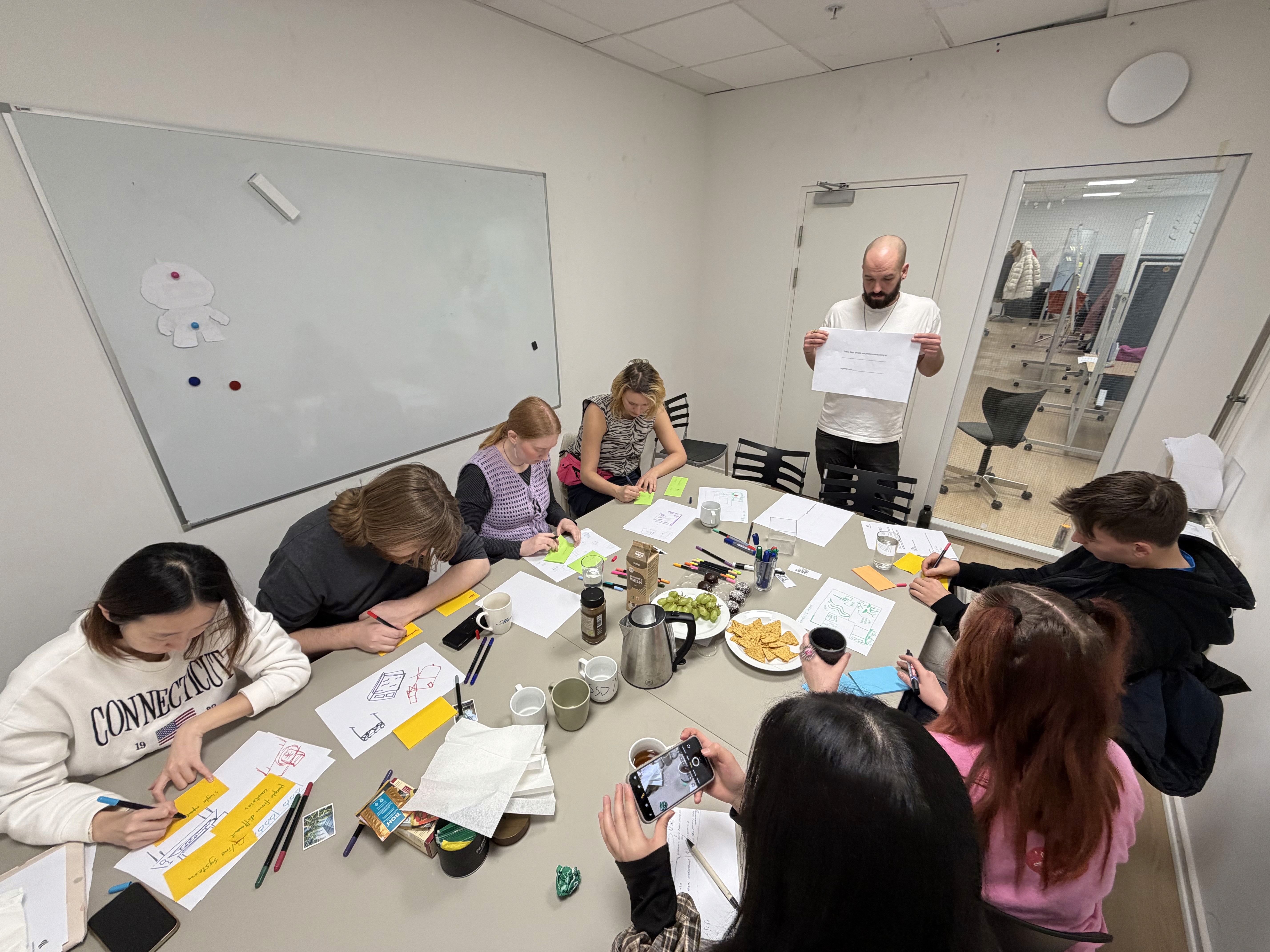
To move beyond assumptions, we combined qualitative and quantitative methods: observations at pickup locations, interviews with current and former members, survey material, a visual workshop, systems mapping, empathy mapping, and thematic clustering. These methods helped us understand both the visible pickup experience and the less visible tensions around commitment, time, volunteering, and value exchange.
Methods and tools used
Observation to understand the pickup flow, signage, visibility, and member behaviour
Interviews to explore motivations, pain points, routines, and commitment
Survey to understand grocery habits and attitudes among young people in Copenhagen
Visual workshop to explore emotional associations around community, health, volunteering, and sustainability
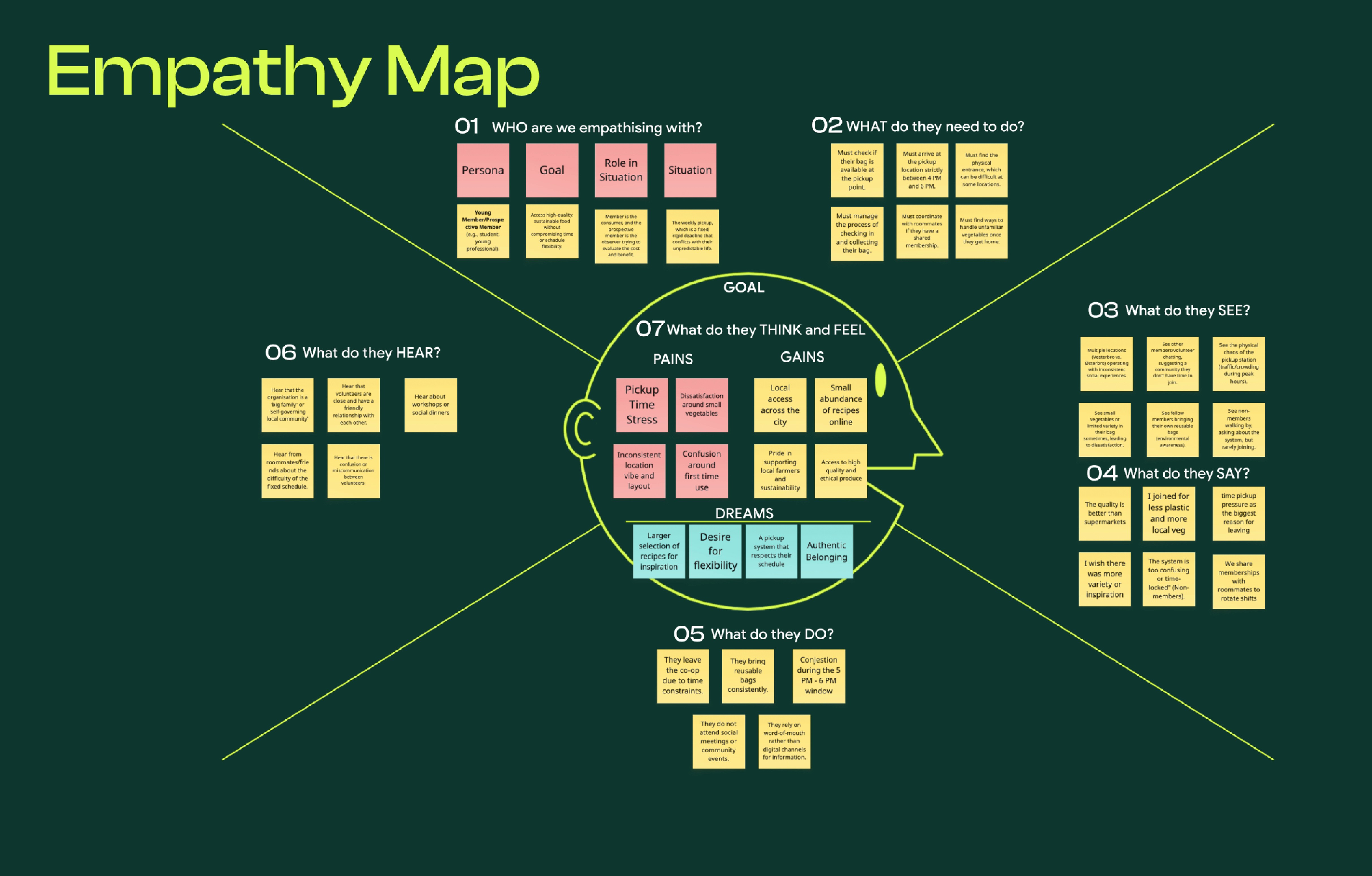
Empathy mapping to organise what users said, felt, saw, did, and thought
Thematic clustering to narrow the material into key design themes
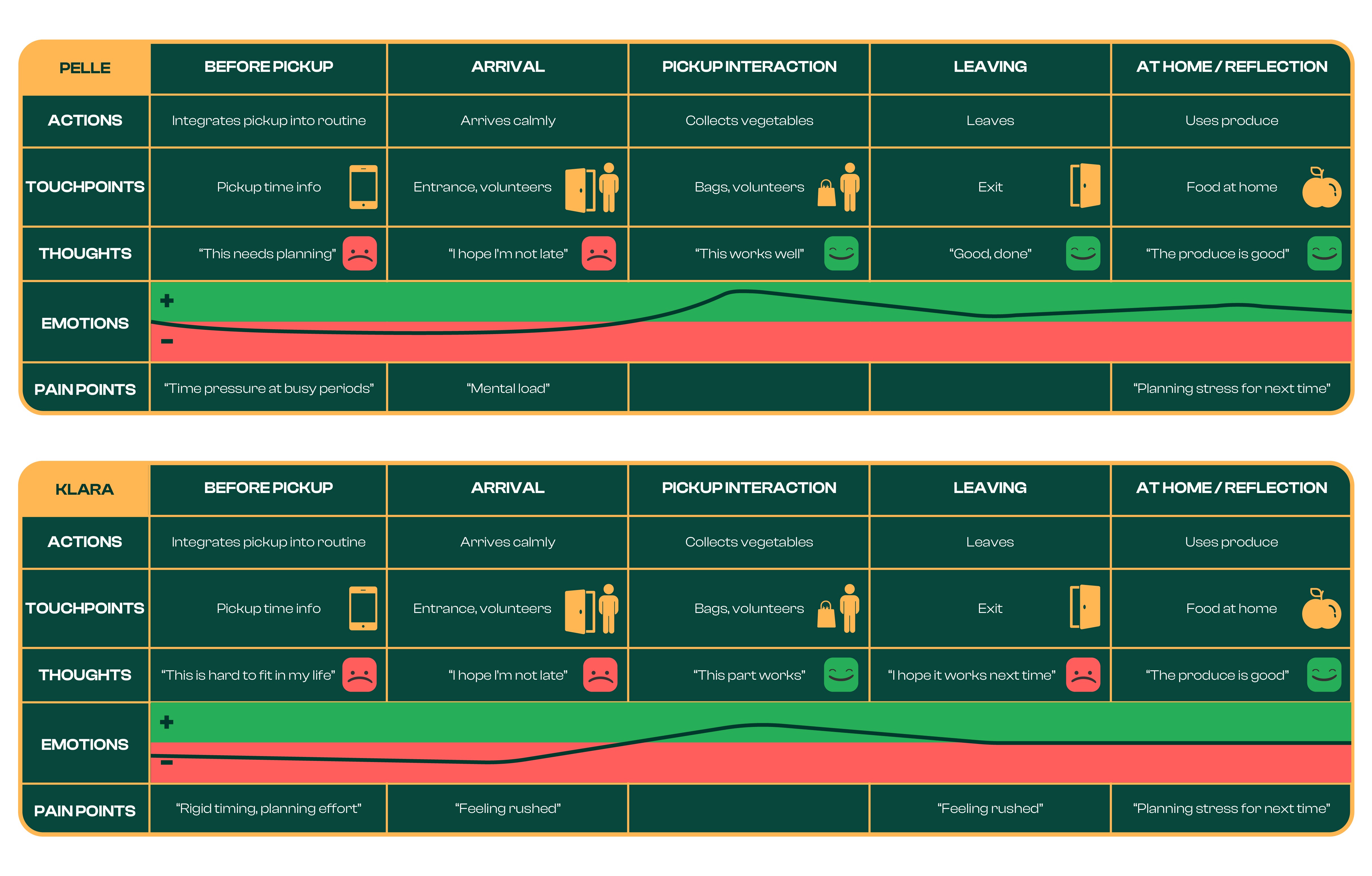
Personas — to translate research findings into concrete user situations and test design directions against different member needs
Journey mapping to compare different pickup experiences over time
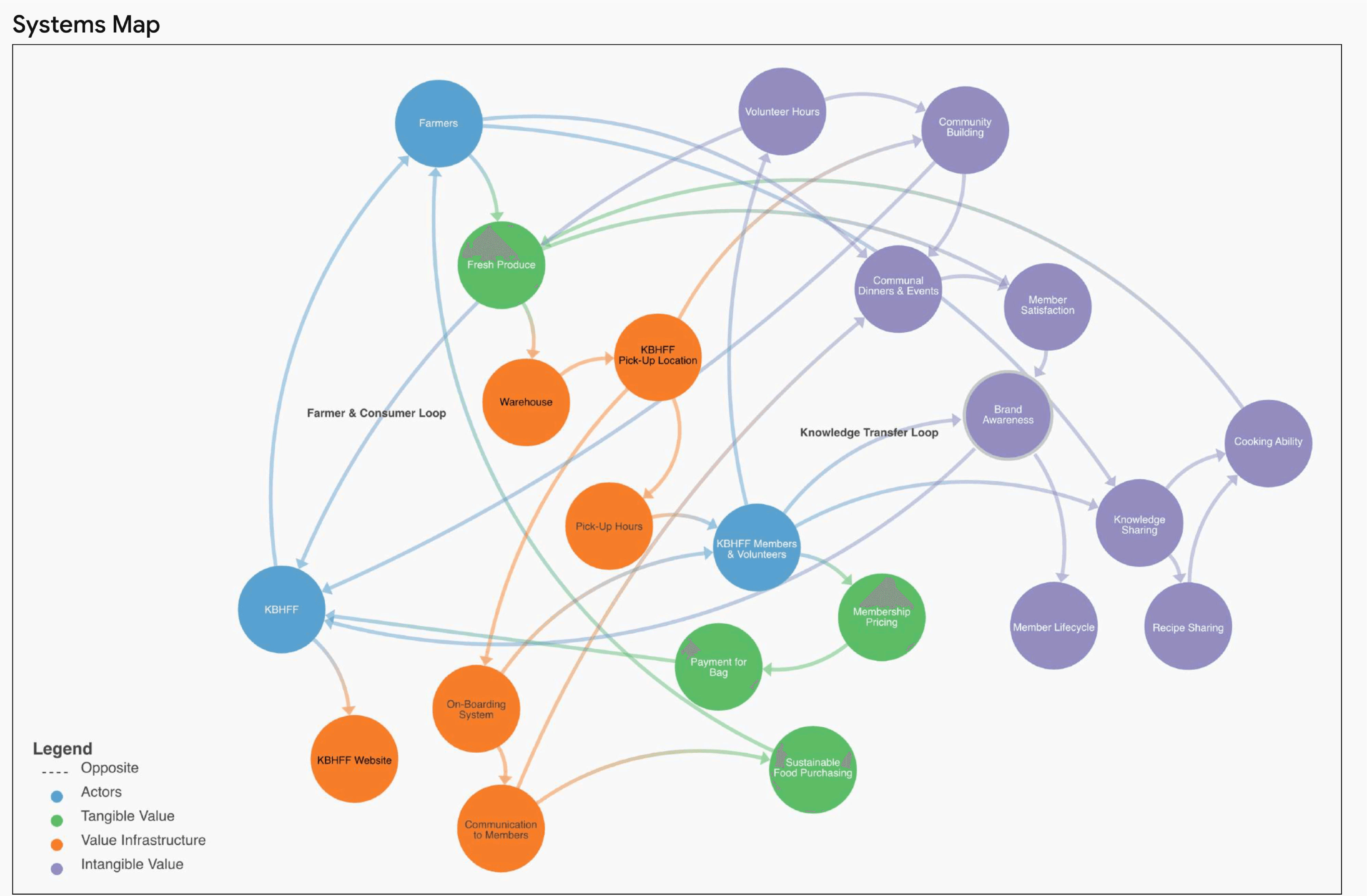
Systems mapping to understand value exchange and stakeholder relationships
Service blueprinting to connect member-facing actions with backstage operations
What we learned
The research showed that young members could value KBHFF’s mission, produce, and community, but still struggle to participate consistently. The issue was not simply lack of interest. Pickup timing, visibility, confusion, commitment, and value proposition appeared as recurring themes across the material.
Reframing the problem
The project was reframed from a broad attraction-and-retention challenge into a more specific service design problem: KBHFF’s synchronised, time-sensitive pickup model makes participation difficult for younger members with changing schedules. The challenge became how to introduce flexibility without weakening the cooperative logic or adding more pressure to volunteers.
After reframing
After reframing the challenge, the next step was to translate the research insights into a service direction that could create value for multiple actors without compromising KBHFF’s cooperative model. Rather than designing a standalone product or convenience feature, we worked with the existing service system: members, volunteers, KBHFF operations, and potential host partners.
Methods and tools used
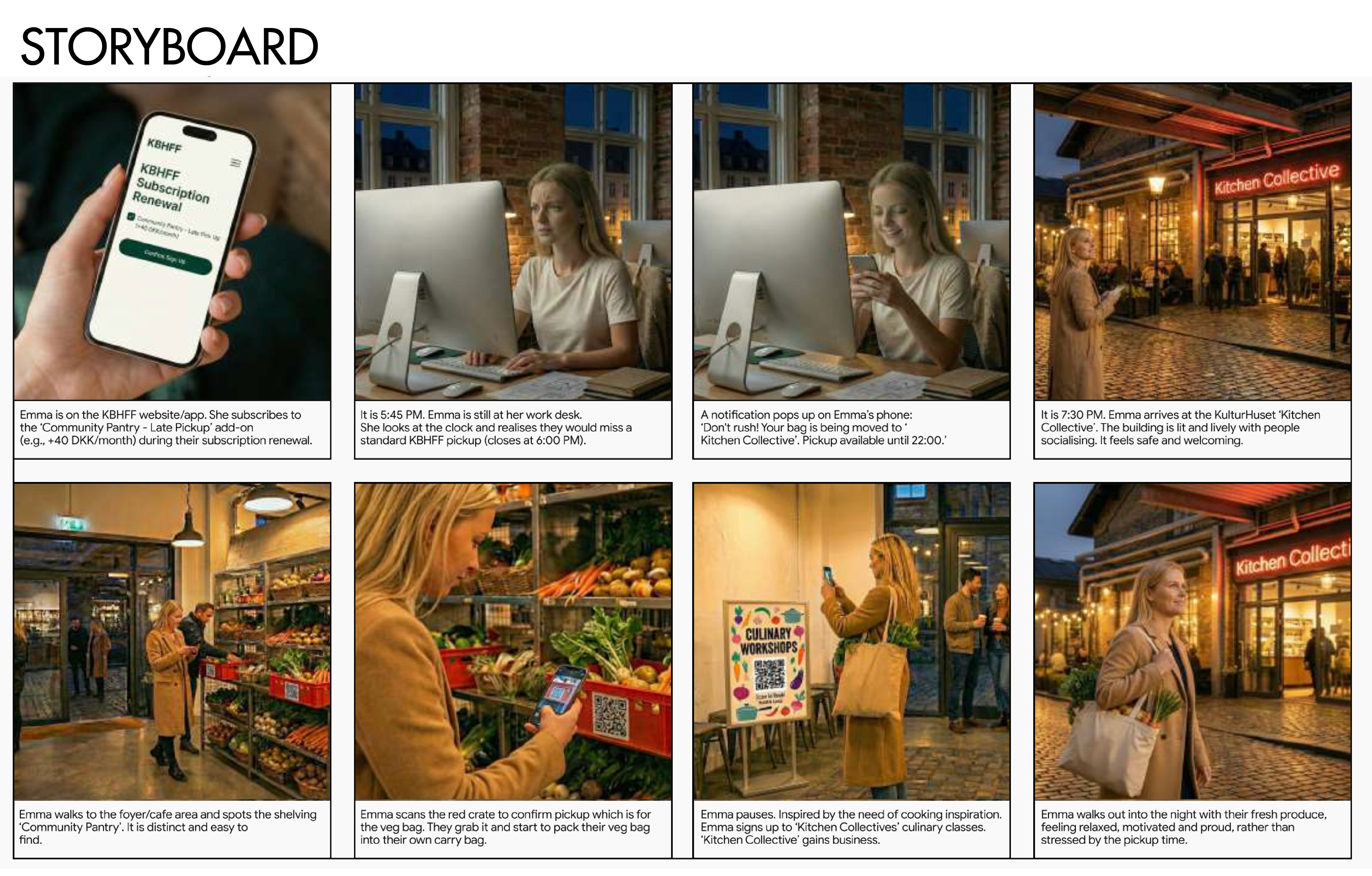
Storyboarding to test the self-service information flow
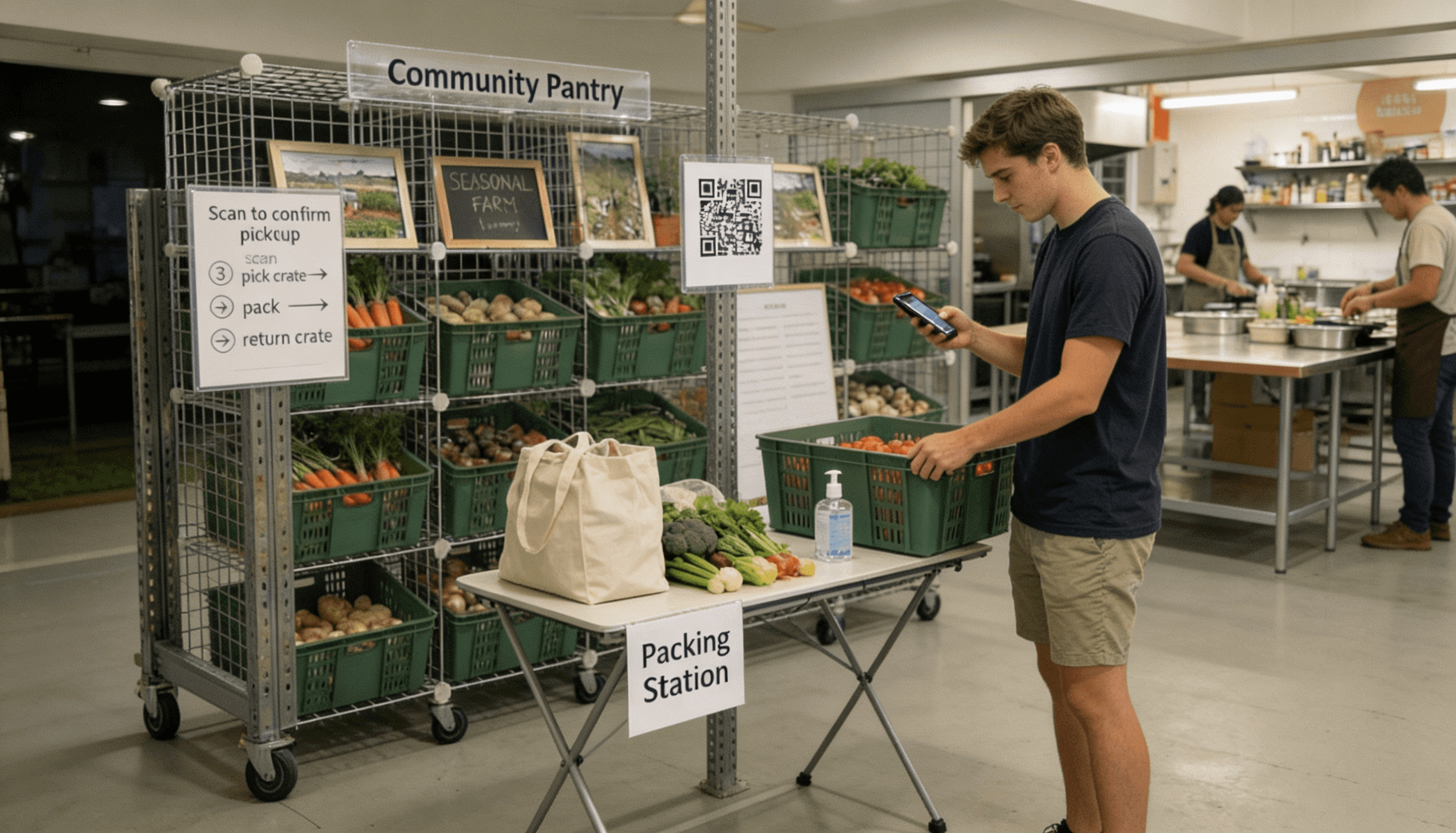
Service origami to test spatial feasibility in the host environment
Co-design survey to explore trust, access, and security assumptions
Service blueprinting to connect member actions with backstage operations
What the methods revealed
The methods showed that flexibility was not only a time issue. A self-service pickup also needed clear information cues, spatial support, trust, and coordination.
Storyboarding revealed a cognitive gap without a volunteer present
Service origami showed the need for a packing station
Blueprinting made backstage requirements visible
Co-created value
Members: A more forgiving pickup experience.
KBHFF: Better retention without extending volunteer shifts.
Host partner: Potential footfall and value alignment with local sustainable food culture.
Service system: More flexible access through existing spaces and relationships.
Resulting service direction
The resulting direction was Community Pantry: a partner-hosted, self-service late-pickup add-on. The shelf, QR confirmation, packing station, and host venue work as touchpoints within a wider cooperative service system.